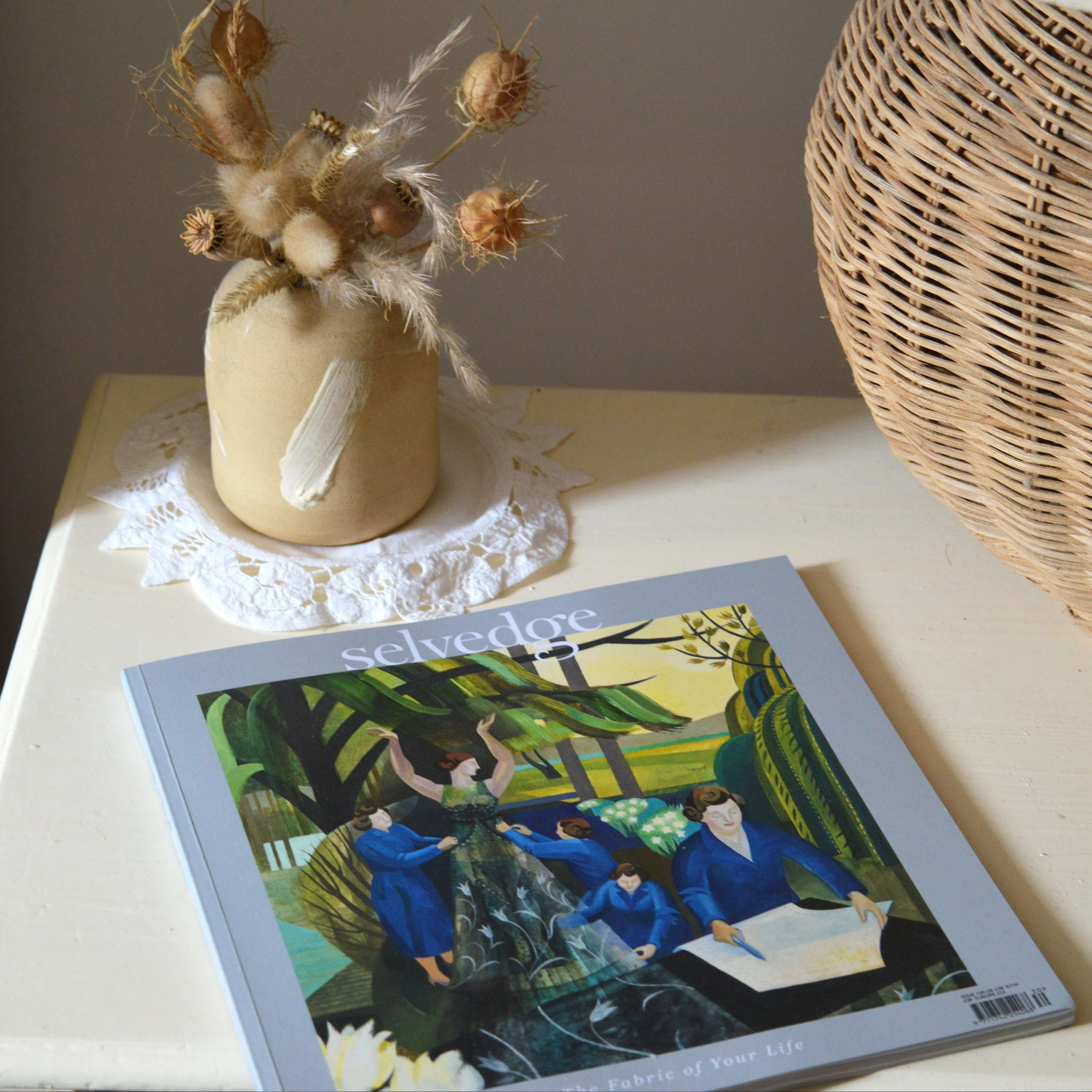
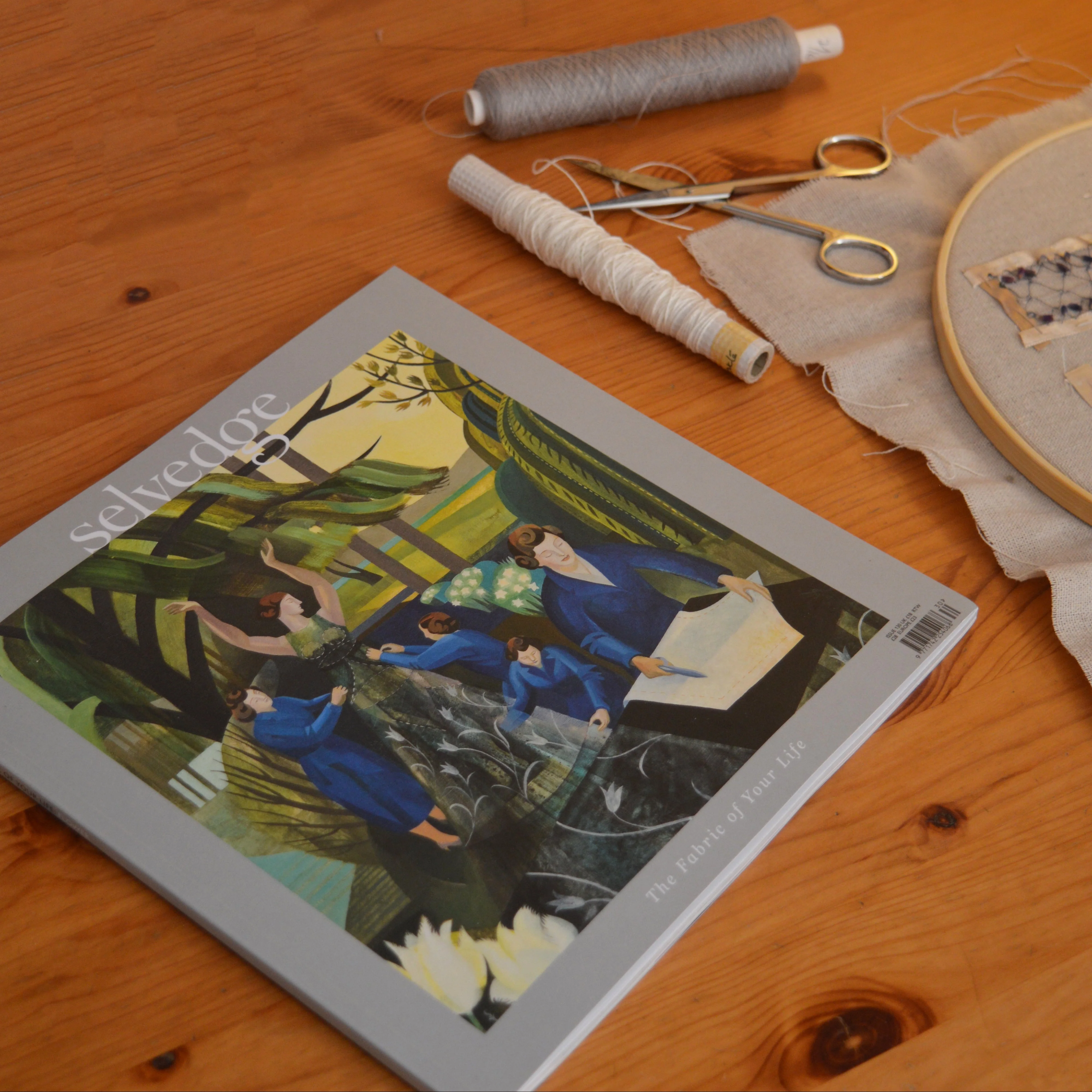



Issue 130 Flower

Spending time away from home has sharpened my sense of what truly matters, of the small, grounding things that make a place feel lived in and loved. These details take on a heightened importance, perhaps more than they strictly deserve: a log-burning stove, Radio 4, and, most of all, a garden. Every inch of my modest, northeast-facing London terrace works hard.
A COVID-era newcomer to gardening, I restricted myself to white flowers, partly to make the task manageable, partly because restraint feels familiar. As a weaver, I am instinctively drawn to structure – Italianate order rather than English cottage-garden abandon – and I have taken pleasure in planning for vertical and horizontal interest, considering texture as carefully as form. The architectural spheres of alliums rise above a sea of cosmos; delicate agapanthus punctuate mounds of hydrangea, set against a backdrop of perfumed climbing jasmine. Learning what these plants like and dislike has involved a process of trial and error: moving things around, watching closely, waiting to see what thrives and what quietly fails.
The parallels with textile making are obvious. Gardening, like weaving, demands patience and forethought, a willingness to start over, and an acceptance of the unexpected. Plans are made, systems imposed, yet the final outcome always contains an element of surprise.
Textile makers’ fascination with plants, of course, is nothing new. For centuries, flowers have provided both subject and substance: from Marie-Jeanne “Rose” Bertin’s floral adornments for Marie Antoinette, to the use of plants as dyes and embellishment, to the countless ways petals, stems, and leaves have been translated into thread. Beyond cloth, floral forms have appeared in ribbon, print, and paint, their shapes endlessly reinterpreted.
In this issue, we explore the enduring relationship between textiles and the botanical world. We visit the Southampton garden of textile designer Jack Lenor Larsen, shaped by Japanese ideas of balance and restraint, and encounter the delicate cut-paper florals of Japanese artist Fumi Imamura. Flowers emerge as a favoured motif for embroidery in Lanto Millington Synge’s collection, donated to the Ulster Museum, while in Corsica, a community of women comes together to celebrate the flora and fauna of their island home through stitch.
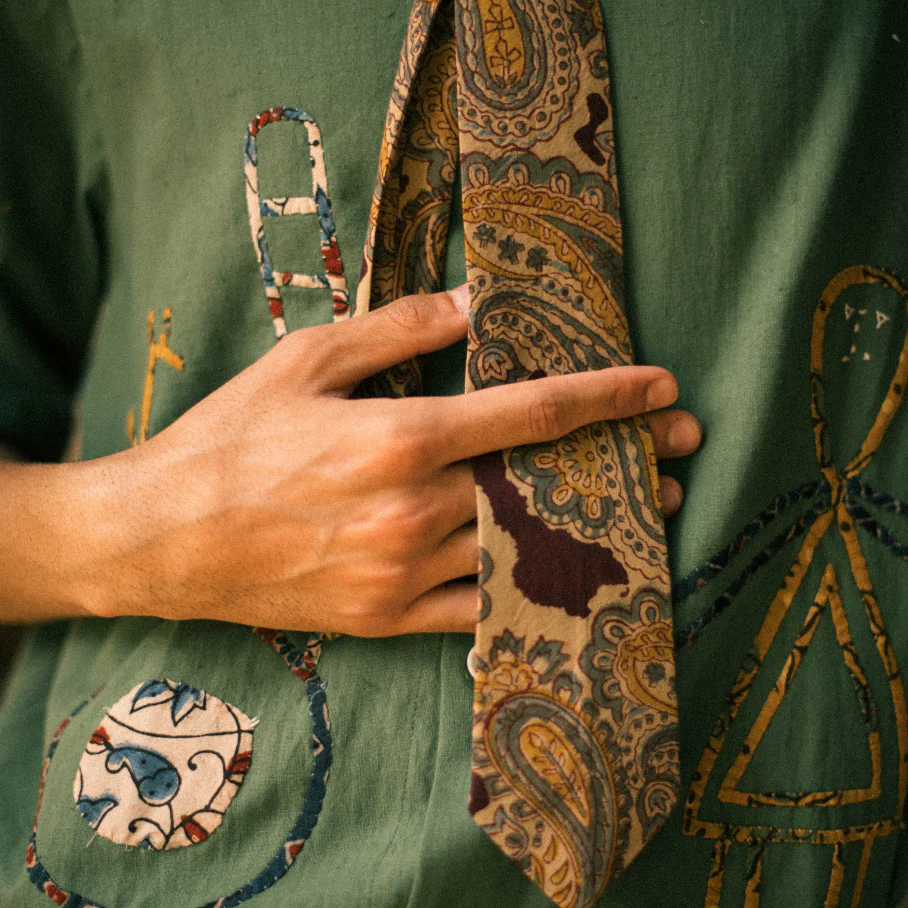
Elsewhere, haute couture designers draw on botanical imagery at the Palais Galliera in Paris; vintage tablecloths are reworked into shirts with a twist by Christina Garcia; and Aneeth Arora offers a riotous homage to Tana Lawn, Liberty of London’s perennial favourite. Across these diverse practices, plants remain a source of structure and freedom, discipline and abundance – much like a garden itself.
Polly Leonard, Founder
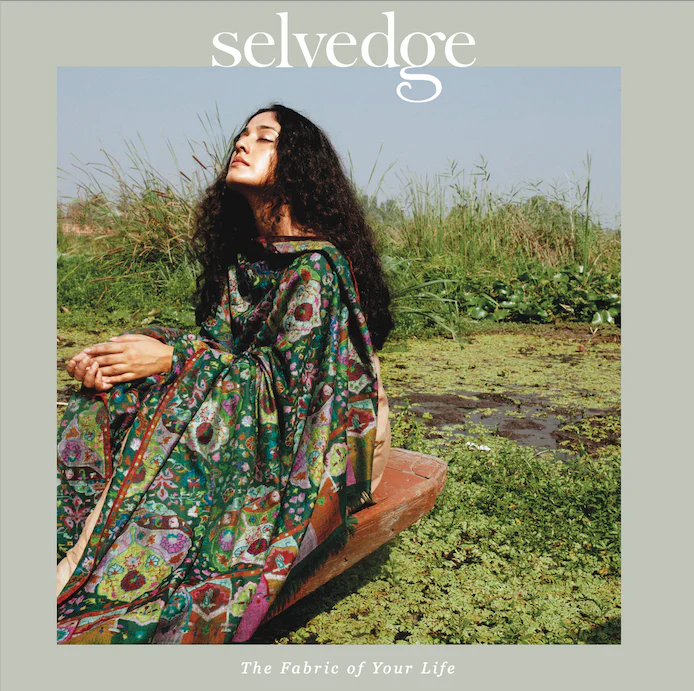
- Selvedge magazine comprises of 96 pages.
- Size 24 cm x 24 cm.
- Printed with soy-based inks on FSC certified paper which has been produced in an environmentally friendly, socially responsible and economically viable manner.
- Sent in biodegradable packaging.
- If you ordered a digital download of an issue, the link will be sent to you within 72 hours of your order.
- Shipping is included in your order. Print issues and Selvedge goods are sent by standard second class/international post for which we advise the delivery to the UK can take up to 14 days, Europe up to 21 days and Rest of World up to 28 days. In-transit tracking is not available. Orders of six of more back issues are sent via a tracked service.
Original: $32.16
-65%$32.16
$11.26Product Information
Product Information
Shipping & Returns
Shipping & Returns
Description
Spending time away from home has sharpened my sense of what truly matters, of the small, grounding things that make a place feel lived in and loved. These details take on a heightened importance, perhaps more than they strictly deserve: a log-burning stove, Radio 4, and, most of all, a garden. Every inch of my modest, northeast-facing London terrace works hard.
A COVID-era newcomer to gardening, I restricted myself to white flowers, partly to make the task manageable, partly because restraint feels familiar. As a weaver, I am instinctively drawn to structure – Italianate order rather than English cottage-garden abandon – and I have taken pleasure in planning for vertical and horizontal interest, considering texture as carefully as form. The architectural spheres of alliums rise above a sea of cosmos; delicate agapanthus punctuate mounds of hydrangea, set against a backdrop of perfumed climbing jasmine. Learning what these plants like and dislike has involved a process of trial and error: moving things around, watching closely, waiting to see what thrives and what quietly fails.
The parallels with textile making are obvious. Gardening, like weaving, demands patience and forethought, a willingness to start over, and an acceptance of the unexpected. Plans are made, systems imposed, yet the final outcome always contains an element of surprise.
Textile makers’ fascination with plants, of course, is nothing new. For centuries, flowers have provided both subject and substance: from Marie-Jeanne “Rose” Bertin’s floral adornments for Marie Antoinette, to the use of plants as dyes and embellishment, to the countless ways petals, stems, and leaves have been translated into thread. Beyond cloth, floral forms have appeared in ribbon, print, and paint, their shapes endlessly reinterpreted.
In this issue, we explore the enduring relationship between textiles and the botanical world. We visit the Southampton garden of textile designer Jack Lenor Larsen, shaped by Japanese ideas of balance and restraint, and encounter the delicate cut-paper florals of Japanese artist Fumi Imamura. Flowers emerge as a favoured motif for embroidery in Lanto Millington Synge’s collection, donated to the Ulster Museum, while in Corsica, a community of women comes together to celebrate the flora and fauna of their island home through stitch.
Elsewhere, haute couture designers draw on botanical imagery at the Palais Galliera in Paris; vintage tablecloths are reworked into shirts with a twist by Christina Garcia; and Aneeth Arora offers a riotous homage to Tana Lawn, Liberty of London’s perennial favourite. Across these diverse practices, plants remain a source of structure and freedom, discipline and abundance – much like a garden itself.
Polly Leonard, Founder
- Selvedge magazine comprises of 96 pages.
- Size 24 cm x 24 cm.
- Printed with soy-based inks on FSC certified paper which has been produced in an environmentally friendly, socially responsible and economically viable manner.
- Sent in biodegradable packaging.
- If you ordered a digital download of an issue, the link will be sent to you within 72 hours of your order.
- Shipping is included in your order. Print issues and Selvedge goods are sent by standard second class/international post for which we advise the delivery to the UK can take up to 14 days, Europe up to 21 days and Rest of World up to 28 days. In-transit tracking is not available. Orders of six of more back issues are sent via a tracked service.