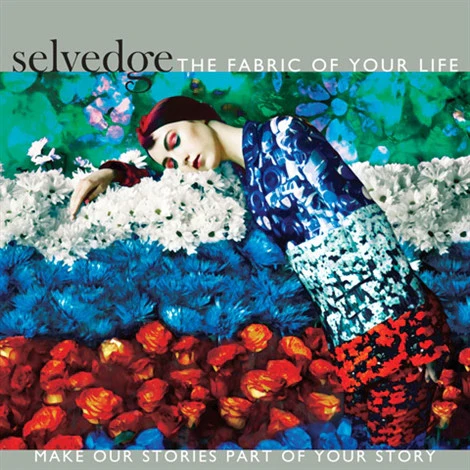














Issue 118 Hand in Hand
May / June 2024
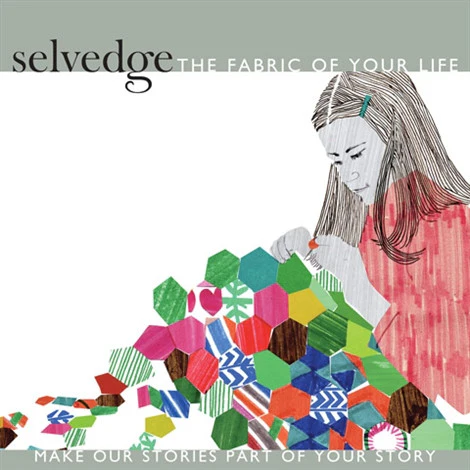
This issue goes to press hot on the heels of my return from the Selvedge Textile Tour of India. I want to take this opportunity to thank my team for going above and beyond in putting the magazine together in my absence, to Katerina, Catherine, Florencia, Kate, and Ella – without your dedication; this issue simply would not have been possible. I also want to thank Param Pandya and Ravi Ramswami in India and all of the hundreds of artisans, designers, and curators from Ladakh to Kerala who invited us into their homes and hearts – your warmth and hospitality will stay with us forever.
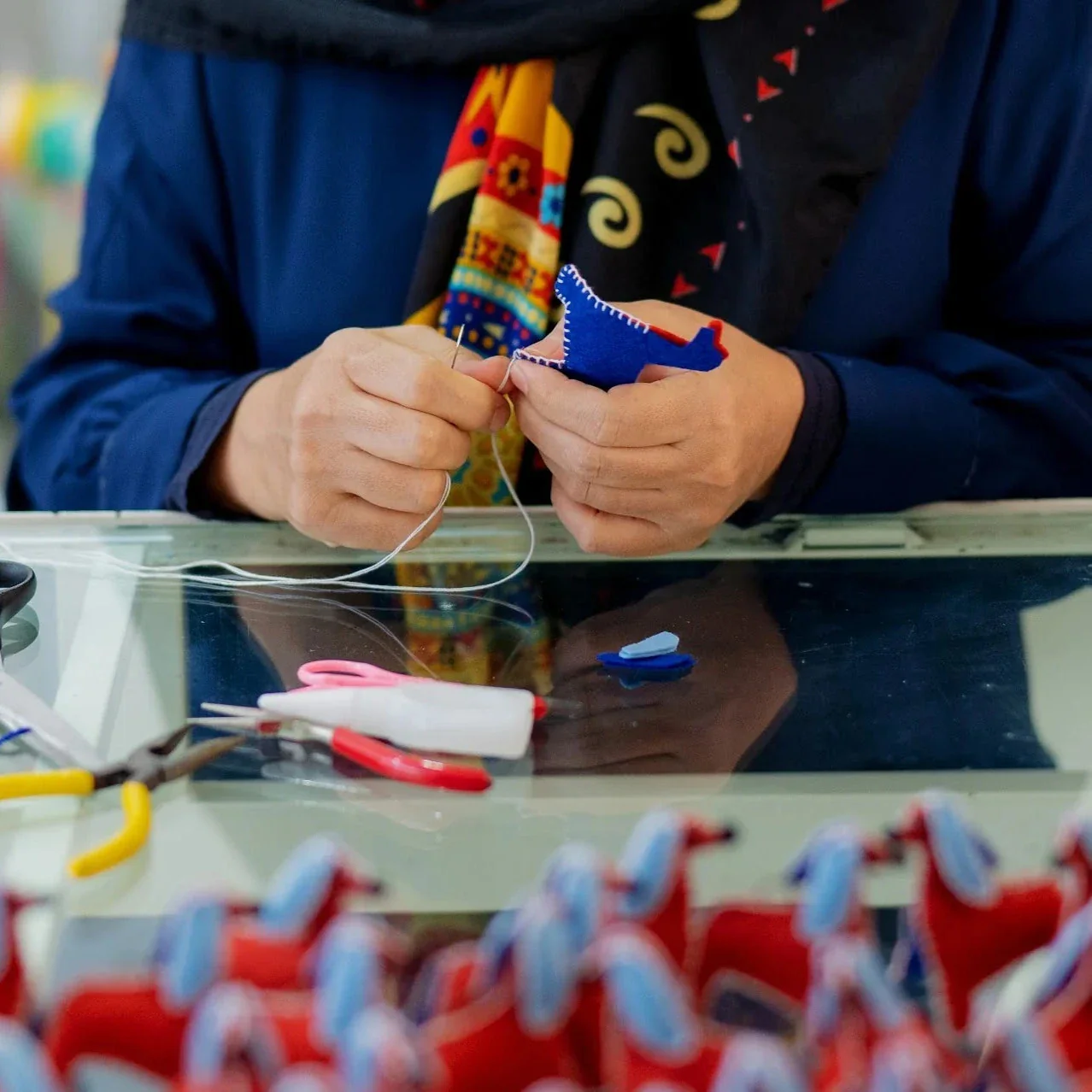
Leading a tour has highlighted the importance of teamwork, and in this issue, we focus on working hand-in-hand with others. For instance, the special relationship between teacher and student is explored in Nicola Miles’s article about her teacher and mentor, Lou Taylor. In this article, Taylor describes the pleasure of watching students encounter historic garments for the first time. In another story, we discover how Nike Davies-Okundaye balances the pleasure of solitary work and what she gains from sharing her skills by burning the midnight oil!
Successful collaborations come in many forms and involve different levels of cooperation. Madrid-based Milliners Maleza joined forces with Claudy Jongstra in her LOADS project – the resulting hats were the outcome of discrete contributions from both designers. Similarly, when designer Odette Blum invited 27 artists to respond to a theme, she gave them a free hand – the project culminated in a book that celebrates their different visions. As Elizabeth King, Head of Costume Production at the Royal Opera House in London, explains, collaborations with more rigid external parameters require more skilled negotiations. Yet, when costume designer Sandy Powell realised a director’s vision, ultimate insight, intuition, and even greater communication were needed.
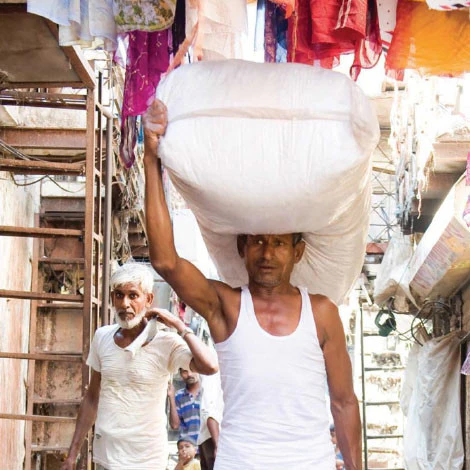
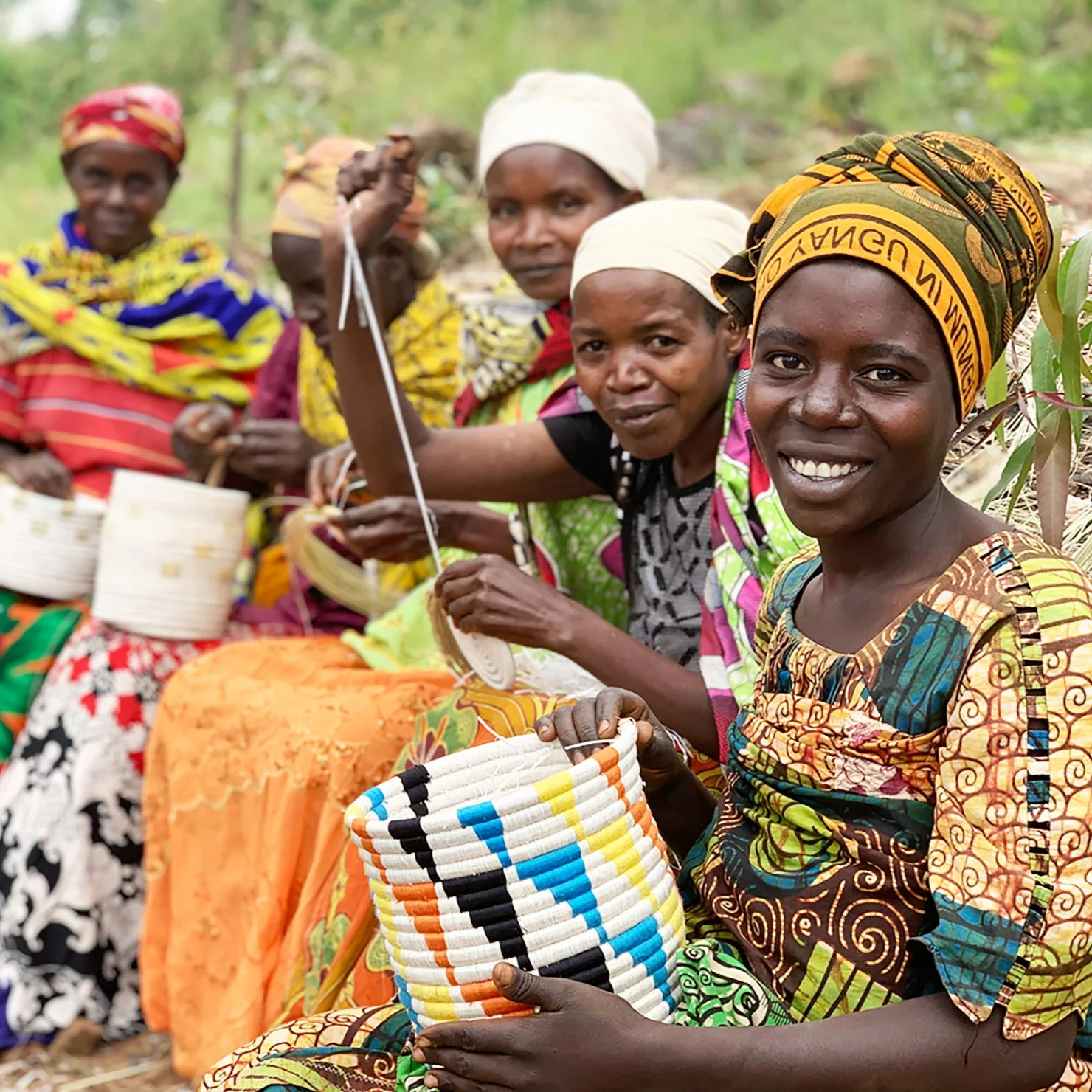
During my time in India, I came face-to-face with collaborations between artisans and designers where both parties were equally respected. From this position of strength, they could overcome the challenges facing the craft community. The information age has brought new opportunities and the promise of a better quality of life but it also threatens the survival of the intangible cultural heritage of hand work. Thao Phuong shares her account of how artisan Phan Thi Thuan navigates the symbiotic relationship between tourists and craft in Vietnam by contributing to the greater interest in lotus-silk weaving and deftly demonstrating how crafts can survive hand in hand with tourism.
Ramesh Menon of Save the Loom warns in Vinita Makhija’s article “Hope for Handloom” about “handmade being positioned on the premise of charity.” He notes, “Most who venture to support continue to play this card, damaging the sector. Handmade is the ultimate luxury and needs to be positioned and marketed in that realm.” Views shared by Madhu Vaishnav of Saheli Women, a co-operative based in Rajasthan. In a round-table conversation, Makhaja’s panel contributed insights into how technology can be used in tandem with the craft sector for mutual benefit. I leave you with the thought that perhaps to save craft; we must collaborate with technology.
Polly Leonard, Founder
Published on 15 April.
- Selvedge magazine comprises of 96 pages.
- Size 24 cm x 24 cm.
- Printed with soy-based inks on FSC certified paper which has been produced in an environmentally friendly, socially responsible and economically viable manner.
- Sent in biodegradable packaging.
- If you ordered a digital download of an issue, the link will be sent to you within 72 hours of your order.
- Shipping is included in your order. Print issues and Selvedge goods are sent by standard second class/international post for which we advise the delivery to the UK can take up to 14 days, Europe up to 21 days and Rest of World up to 28 days. In-transit tracking is not available. Orders of six of more back issues are sent via a tracked service.
Original: $32.16
-65%$32.16
$11.26Product Information
Product Information
Shipping & Returns
Shipping & Returns
Description
May / June 2024
This issue goes to press hot on the heels of my return from the Selvedge Textile Tour of India. I want to take this opportunity to thank my team for going above and beyond in putting the magazine together in my absence, to Katerina, Catherine, Florencia, Kate, and Ella – without your dedication; this issue simply would not have been possible. I also want to thank Param Pandya and Ravi Ramswami in India and all of the hundreds of artisans, designers, and curators from Ladakh to Kerala who invited us into their homes and hearts – your warmth and hospitality will stay with us forever.
Leading a tour has highlighted the importance of teamwork, and in this issue, we focus on working hand-in-hand with others. For instance, the special relationship between teacher and student is explored in Nicola Miles’s article about her teacher and mentor, Lou Taylor. In this article, Taylor describes the pleasure of watching students encounter historic garments for the first time. In another story, we discover how Nike Davies-Okundaye balances the pleasure of solitary work and what she gains from sharing her skills by burning the midnight oil!
Successful collaborations come in many forms and involve different levels of cooperation. Madrid-based Milliners Maleza joined forces with Claudy Jongstra in her LOADS project – the resulting hats were the outcome of discrete contributions from both designers. Similarly, when designer Odette Blum invited 27 artists to respond to a theme, she gave them a free hand – the project culminated in a book that celebrates their different visions. As Elizabeth King, Head of Costume Production at the Royal Opera House in London, explains, collaborations with more rigid external parameters require more skilled negotiations. Yet, when costume designer Sandy Powell realised a director’s vision, ultimate insight, intuition, and even greater communication were needed.
During my time in India, I came face-to-face with collaborations between artisans and designers where both parties were equally respected. From this position of strength, they could overcome the challenges facing the craft community. The information age has brought new opportunities and the promise of a better quality of life but it also threatens the survival of the intangible cultural heritage of hand work. Thao Phuong shares her account of how artisan Phan Thi Thuan navigates the symbiotic relationship between tourists and craft in Vietnam by contributing to the greater interest in lotus-silk weaving and deftly demonstrating how crafts can survive hand in hand with tourism.
Ramesh Menon of Save the Loom warns in Vinita Makhija’s article “Hope for Handloom” about “handmade being positioned on the premise of charity.” He notes, “Most who venture to support continue to play this card, damaging the sector. Handmade is the ultimate luxury and needs to be positioned and marketed in that realm.” Views shared by Madhu Vaishnav of Saheli Women, a co-operative based in Rajasthan. In a round-table conversation, Makhaja’s panel contributed insights into how technology can be used in tandem with the craft sector for mutual benefit. I leave you with the thought that perhaps to save craft; we must collaborate with technology.
Polly Leonard, Founder
Published on 15 April.
- Selvedge magazine comprises of 96 pages.
- Size 24 cm x 24 cm.
- Printed with soy-based inks on FSC certified paper which has been produced in an environmentally friendly, socially responsible and economically viable manner.
- Sent in biodegradable packaging.
- If you ordered a digital download of an issue, the link will be sent to you within 72 hours of your order.
- Shipping is included in your order. Print issues and Selvedge goods are sent by standard second class/international post for which we advise the delivery to the UK can take up to 14 days, Europe up to 21 days and Rest of World up to 28 days. In-transit tracking is not available. Orders of six of more back issues are sent via a tracked service.